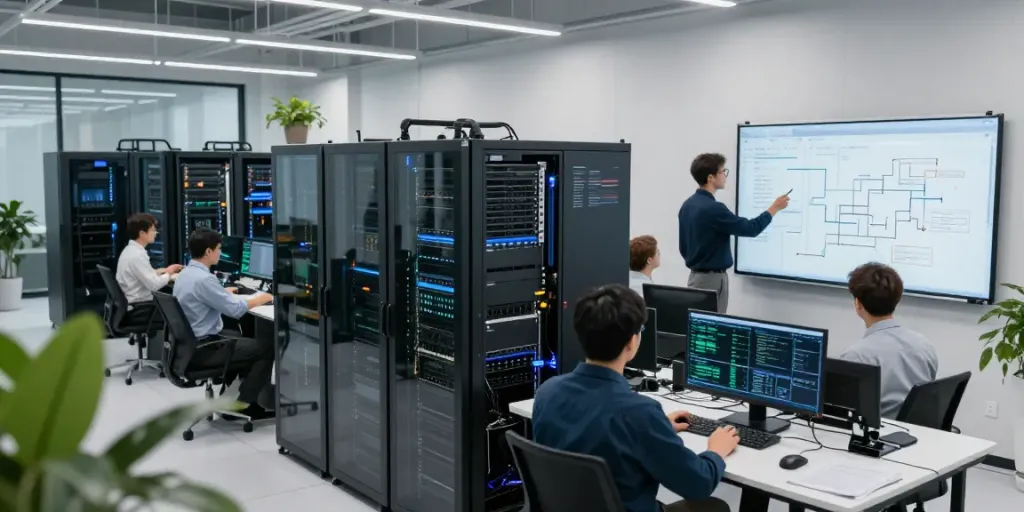
Understanding AI Infrastructure
As organizations around the globe continue to harness the power of artificial intelligence (AI), understanding the underlying AI infrastructure becomes paramount. AI infrastructure encompasses the hardware, software, and network resources that are essential for developing, deploying, and managing AI applications at scale. This framework enables businesses to operate efficiently and respond to the ever-increasing demand for AI solutions across various sectors.
What is AI Infrastructure?
AI infrastructure refers to the combination of technology and architectural frameworks required to support the lifecycle of AI models. This includes everything from data collection and storage to processing and inference. In essence, it forms the backbone that allows AI applications to function effectively. Without robust AI infrastructure, organizations would struggle to leverage AI capabilities to their full potential.
Key Components of AI Infrastructure
The key components of AI infrastructure can be classified into five main categories:
- Hardware: This includes powerful GPUs, TPUs, and a range of servers capable of processing complex algorithms.
- Data Storage: Efficient storage systems that can handle vast amounts of data for training AI models.
- Networking: High-speed networks that enable quick data transfer to support real-time processing.
- Software: AI frameworks and platforms that facilitate model development, such as TensorFlow and PyTorch.
- Cloud Services: Hosted solutions that provide scalable resources for AI workloads, allowing for flexibility and cost-efficiency.
The Role of Power in AI Infrastructure
Power is a critical component of AI infrastructure, as it fuels the computing resources necessary for running AI models. Efficient and reliable power supply is essential to ensure that AI workloads can be processed without interruptions. Furthermore, advancements in energy-efficient technologies are increasingly impacting how organizations approach their AI infrastructure design.
Participating in the AI Token Economy
The emergence of the AI Token Economy is revolutionizing how organizations and individuals interact with AI services. Token-based models provide a system for measuring and rewarding contributions to the AI infrastructure, thus introducing a new layer of engagement for users.
AI Infrastructure Power Plans Explained
AI Infrastructure Power Plans are structured agreements that allow participants to contribute to, and benefit from, the AI infrastructure ecosystem. Each plan outlines specific parameters regarding the level of power support, duration, and potential rewards based on performance metrics. By participating in these plans, individuals can directly influence the capacity of AI operations, thereby enhancing the overall efficiency of AI services.
Your Contribution to AI Token Services
Your contribution to AI Token services involves supporting electricity and computing capacity that drives AI factories. As you activate your plan, you engage in the contribution tracking system, which measures your input based on the electricity supplied to GPU infrastructures. This process not only aids in powering AI services but also establishes a quantifiable metric for your participation within the AI Token Economy.
Calculating Contribution Rewards
The calculation of contribution rewards is based on a transparent framework that assesses the electricity supported by your plan and its impact on AI workloads. The platform records your power contribution and correlates it with the operational performance of AI factories, facilitating a fair distribution of rewards according to the agreed terms of your chosen plan.
Building a Robust AI Infrastructure
Constructing an effective AI infrastructure involves a thoughtful approach to design, deployment, and management. Here are key considerations for organizations seeking to improve their AI capabilities.
Best Practices for AI Infrastructure Design
When designing AI infrastructure, organizations should focus on the following best practices:
- Scalability: Ensure the infrastructure can grow with demand, accommodating increased AI workloads without requiring significant overhauls.
- Modularity: Design components that are modular to facilitate easy upgrades and replacements.
- Energy Efficiency: Implement energy-efficient technologies to reduce operational costs and minimize environmental impact.
- Security: Prioritize security measures to protect sensitive data and AI models from unauthorized access.
Common Challenges in AI Infrastructure Deployment
Organizations may encounter several challenges when deploying AI infrastructure, including:
- Integration Issues: Aligning disparate systems and technologies can be complex.
- Cost Management: Maintaining control over infrastructure costs while meeting business needs.
- Talent Shortage: The need for skilled personnel to manage and optimize AI infrastructure can be a barrier.
- Data Governance: Establishing frameworks for data quality and compliance can be challenging.
Case Studies: Successful AI Infrastructure Implementations
Several companies have successfully implemented AI infrastructure, showcasing best practices and lessons learned. For example:
- Company A: By transitioning to a cloud-native architecture, they improved scalability and reduced latency in AI services.
- Company B: Implementing a hybrid infrastructure allowed them to optimize costs while maintaining control over critical processes.
Future Trends in AI Infrastructure for 2026
As AI technology advances, so too does the infrastructure supporting it. Understanding future trends is essential for organizations to stay competitive.
Emerging Technologies in AI Infrastructure
2026 is set to witness the integration of several groundbreaking technologies in AI infrastructure, including:
- Edge Computing: Processing data closer to its source to enhance responsiveness and reduce bandwidth usage.
- Quantum Computing: Enabling complex computations that were previously infeasible, greatly speeding up AI training processes.
- AI at the Edge: Deploying AI algorithms directly on edge devices to enhance real-time decision-making capabilities.
Scalability and Flexibility in AI Operations
Adapting to fluctuating AI workloads requires a focus on scalability and flexibility. Organizations are increasingly seeking solutions that allow for on-demand resource allocation, which will be critical as AI applications expand.
Environmental Considerations in AI Infrastructure
As sustainability becomes a key focus, organizations must consider the environmental impact of their AI infrastructure. Strategies to reduce carbon footprints, such as optimizing energy use and utilizing renewable energy sources, will be crucial.
Frequently Asked Questions about AI Infrastructure
To further demystify AI infrastructure and its applications, here are some common questions:
What are the top companies in AI infrastructure?
The leading companies include NVIDIA, IBM, Google, and Microsoft, all of which are making significant strides in AI infrastructure development.
How do AI Infrastructure Power Plans work?
AI Infrastructure Power Plans function as contracts where participants contribute power to support AI operations in exchange for potential rewards.
What skills are needed for AI Infrastructure jobs?
Essential skills include expertise in cloud computing, data management, machine learning, and strong programming capabilities.
How is power consumption measured in AI Infrastructure?
Power consumption is measured based on the electricity used to support GPU operations and the corresponding workloads executed.
What future developments can we expect in AI Infrastructure?
Future developments will likely focus on enhanced scalability, the use of renewable energy, and the integration of emerging technologies.